
About us
Who we are
The Centre for Literacy and Community Development (CELCODE(U) Ltd) is a community-based, not-for-profit organization registered with the Registrar of Companies in Uganda (Registration Number: 80020003514138).
Formerly known as the Uganda Rural Literacy and Community Development Association (URLCODA), the organization adopted its current name in compliance with national regulations requiring non-governmental organizations to remove the word “Uganda” from their official titles.
CELCODE focuses on promoting literacy and numeracy through inclusive, non-formal adult and lifelong learning programs. It adopts a social practices approach to literacy an inclusive, multifaceted, intergenerational, multilingual, and culturally sensitive model that reflects how literacy is embedded in people’s everyday lives.
CELCODE’s work aims to empower marginalized communities, with particular attention to:
Non-literate adults
Youth
Individuals infected and affected by HIV and TB
Orphans
Pupils struggling with literacy and numeracy
By building foundational skills and fostering lifelong learning, CELCODE seeks to improve the quality of life and social participation of underserved populations across Uganda.
CELCODE(U) Ltd is a volunteer-led organization, also registered with the Directorate of Community Services in Arua City, Uganda. The organization works in collaboration with both local and international partners to mobilize resources for community development initiatives. Through these partnerships, CELCODE strives to address the needs of vulnerable populations and create sustainable, inclusive opportunities for empowerment and growth.
Our approach
Our Mission
To foster a literate, secure, healthy, and harmonious society that encourages sustainable grassroots development.
Our mission is to foster a literate, secure, healthy, and harmonious society that supports sustainable grassroots development. We are dedicated to promoting education, well-being, and social cohesion at the community level, empowering individuals to take an active role in their own development. Through inclusive and collaborative efforts, we aim to build resilient communities that thrive on shared values of peace, sustainability, and mutual support.
Our Vision
To be Uganda’s leading community-based provider of inclusive, non-formal adult, and lifelong learning programs.
Our vision is to become Uganda’s leading community-based provider of inclusive, non-formal adult and lifelong learning programs. We are committed to empowering individuals through accessible education that meets the diverse needs of adult learners across the country. By offering flexible, practical, and relevant learning opportunities, we aim to foster personal growth, enhance skills, and improve livelihoods, ensuring no one is left behind in the pursuit of lifelong learning.
Governance Structure
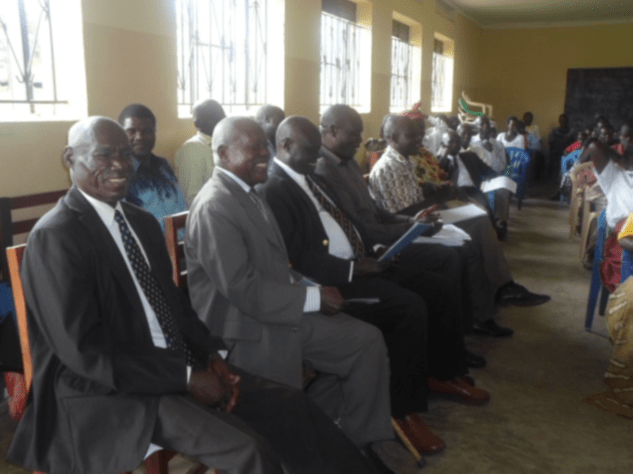
CELCODE is governed by a five-member Board providing strategic direction.includes staff and volunteers supported by committees focusing on projects, finance, and disciplinary matters.
Motto
Literacy for Sustainable Livelihoods.
Strategies
CELCODE's work is built on collaboration, voluntarism, multidisciplinary approaches, and a focus on the needy.
CELCODE’s work is driven by collaboration, voluntarism, and multidisciplinary approaches to address the needs of underserved communities. We focus on empowering vulnerable populations through partnerships with diverse stakeholders, leveraging volunteer efforts, and combining expertise from various fields to create sustainable, holistic solutions. Our mission is to foster long-term change by addressing systemic issues and ensuring that marginalized communities have the resources and agency to thrive.
objectives
- To provide literacy and non-formal adult and lifelong learning opportunities for rural population
- To train adult literacy instructors/facilitators to support adult literacy and lifelong learning prorammes at community level
- To undertake research and consultancy services on literacy and non-formal adult and lifelong learning related issues
- To provide sensitization and capacity building training to members of the community on poverty reduction, environmental conservation, climate change, HIV/AIDS and land related issues
- To promote interdenominational, cross-cultural cooperation, and peaceful co-existence among the people.
- To encourage the spirit of voluntarism and partnerships in fostering grass roots level development among the people